On the architecture of shelter, and of local wood
Ruean Thai: Vernacular Timber and the Monsoon
The traditional Siamese house, or Ruean Thai (เรือนไทย), is an elegant exercise in climate adaptation. Far from mere shelter, these modular structures are built from local hardwoods using joinery techniques passed down through generations of carpenters. Every design choice is dictated by the tropical environment, specifically the dual challenges of intense heat and seasonal flooding.
To withstand the annual monsoons, the houses are raised on stout stilts at least two meters above the ground. This creates a shaded underfloor space, the tai thun (ใต้ถุน), which serves as a breezy workshop, storage area, and shelter for livestock during the day. Access to the main living platform is provided by external wooden stairs, designed to be drawn up and secured at night. A broad, open veranda called the chaan (ชาน) acts as the central artery of the home, linking the individual rooms. The floorboards of the veranda are deliberately spaced slightly apart, allowing rainwater to drain instantly to the earth below.
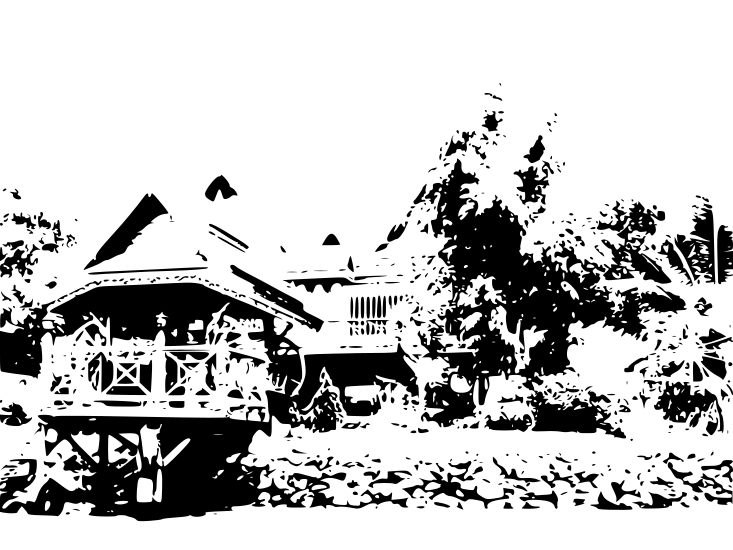
Ruean Mu: The Growing Compound
In central Siam, family structures are reflected in the layout of the home. When a new family is established, it begins with a single bedroom and an adjacent hall. As children marry and the household expands, new pavilions are constructed around the perimeter of the central chaan. This evolutionary architecture is called the Ruean Mu (เรือนหมู่), a cluster of distinct wooden rooms sharing a elevated communal deck.
The roofs of these pavilions are pitched at steep angles, allowing heavy rains to run off immediately while creating a high interior volume where hot air can rise away from the living quarters. The sides of the gables are fitted with curved windbreak boards called panlom (ปั้นลม) to protect the thatch or tiling from fierce gusts. Depending on wealth, roofs are covered with simple thatch, split bamboo, or baked terracotta tiles. Among the wealthy, these tiles are styled as kap kluay (banana-trunk), kled tao (turtle-shell), or hang yiao (falcon-tail), overlapping in intricate patterns that mirror natural scales.
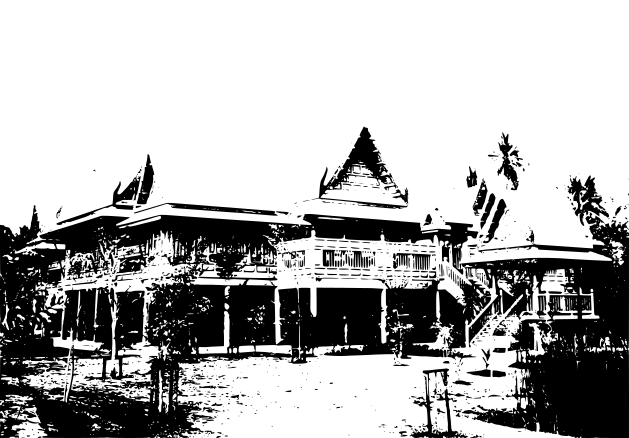
The walls themselves are prefabricated panels assembled without nails, a style known as Ruean Khrueang Sab (เรือนเครื่องสับ). Skilled woodworkers carve precise joinery, securing panels of teak, shorea, or rosewood with wooden dowels. This modular construction allows entire houses to be dismantled, transported, and reassembled elsewhere when riverbeds shift or political fortunes change. Common wall patterns include the brick-like fa pakon, the vertical fa sai bua, and the ingenious fa lai double-sliding panels that regulate ventilation and light.
Ruean Khrueang Phook: The Bamboo Hut
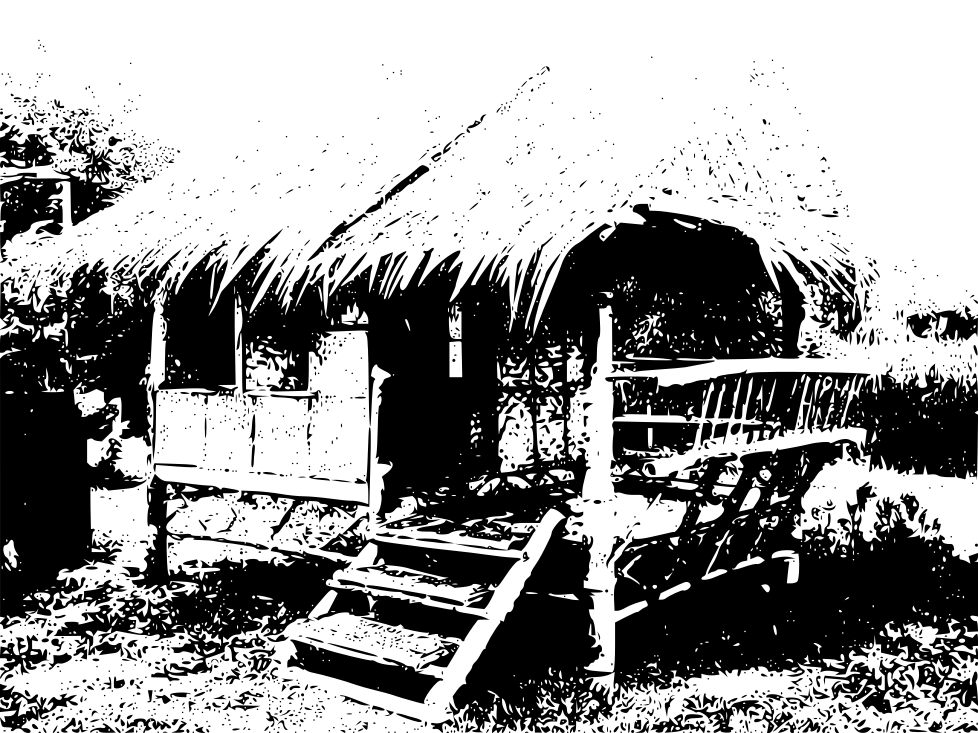
While the wealthy build with hardwood and complex joinery, the common folk construct the Ruean Khrueang Phook (เรือนเครื่องผูก). These lightweight dwellings utilize a simple bamboo framework bound together with rattan strips, vines, or hemp ropes. Walls are woven from bamboo or palm leaves (fa khat tae), providing excellent ventilation for kitchens and sleeping quarters. Though temporary and easily damaged by severe storms, they can be built or repaired in a matter of days by a small village community.
Subscribe with your Atmosphere account: Bluesky,
Northsky, Blacksky, Eurosky, Tangled, Leaflet, ...